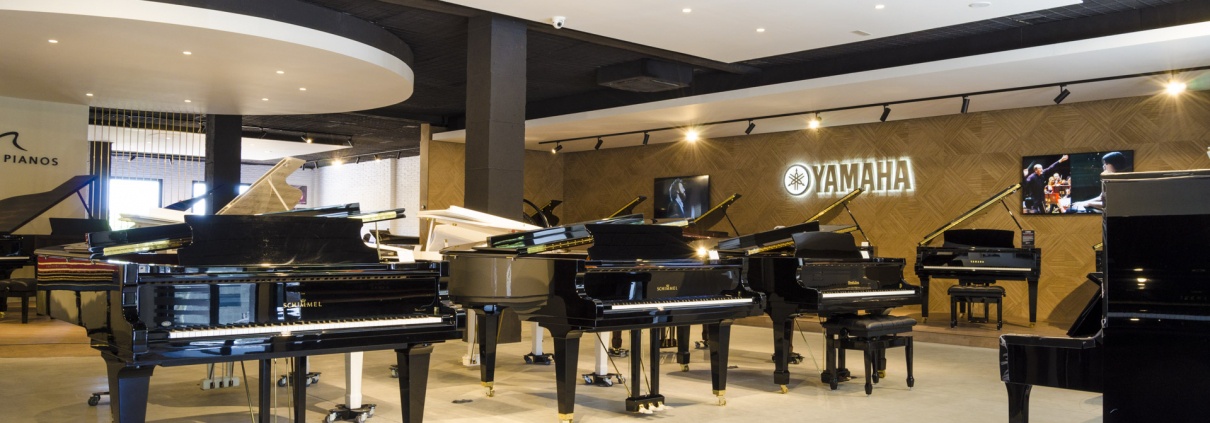
Buying a used grand piano: a guide to avoid unpleasant surprises

Buy a used grand piano This can be an excellent way to access a quality instrument for a much lower price than buying new. A well-maintained Yamaha, Kawai, Steinway, or Bösendorfer can retain excellent musical qualities for several decades.
But buying a used piano also carries risks. Behind an immaculate cabinet, there may be a badly worn mechanism, a damaged soundboard, or a pinblock that is unable to maintain proper tuning.
Before signing, it is therefore essential to check several key points.
Here is our complete guide to buying a used grand piano without any unpleasant surprises.
Why buy a used grand piano?
The main advantage is obviously the price.
A new grand piano is generally a significant investment. On the second-hand market, it's possible to find models from major brands for a fraction of their new price.
This opportunity allows, in particular:
- to access a higher range for the same budget; ;
- to buy a brand-name piano that has become financially inaccessible when new; ;
- to find certain particularly sought-after vintage models; ;
- to limit the discount in the first few years.
A good grand piano can have a very long lifespan provided it has been properly maintained.
Therefore, an old instrument is not necessarily a bad purchase.
1. Never buy based solely on appearance
This is probably the most common mistake.
A piano can look like a perfectly shiny piece of furniture while still requiring several thousand euros worth of work.
Conversely, a few scratches on the varnish can hide a mechanically excellent instrument.
When buying second-hand, the aesthetic condition should therefore remain secondary.
The most important elements are found inside the piano.
2. Verify the age of the piano using the serial number
Each piano has a serial number which usually allows its year of manufacture to be determined.
It is often found:
- on the metal frame; ;
- near the ankles; ;
- under the desk; ;
- or near the soundboard.
Once this number has been noted, it is often possible to find the year of manufacture using the manufacturer's databases.
Age provides an initial indication, but it is not sufficient to determine the value of the piano.
A well-maintained 40-year-old instrument can be in better condition than a 15-year-old piano that has been stored in poor conditions.
3. Examine the soundboard
The soundboard plays a major role in sound production.
It is usually made of spruce and is located under the ropes.
During the visit, inspect it carefully.
A few small cracks are not necessarily serious
Fluctuations in humidity can cause cracks to appear over time.
Not all of them render the piano unusable.
On the other hand, significant cracks accompanied by unwanted vibrations may require costly restoration.
Loss of curvature in the soundboard can also affect sound power and projection.
👉 Also read: How to maintain a grand piano in winter?
4. Check the ankles and the bed base
The soundboard holds the pegs over which the strings are stretched.
It must be able to withstand considerable tension while allowing the piano to maintain its tuning.
A very worn bed base can lead to:
- a piano that goes out of tune quickly; ;
- ankles that are too easy to turn; ;
- agreements are becoming more and more frequent.
Repairing or replacing the bed base can represent a significant expense.
This is one of the reasons why consulting a technician before purchase is strongly recommended.
5. Test all the keys
Play the 88 keys, even if it may seem tedious.
In particular, check:
- that no key remains stuck; ;
- that all quickly return to position; ;
- that their resistance is relatively homogeneous; ;
- that no unusual mechanical noise is present; ;
- that the rapid repetitions are working correctly.
Also try different dynamic levels, from pianissimo to fortissimo.
A very worn engine may require a complete overhaul.
6. Observe the condition of the hammers
The hammers strike the strings several thousand times during the life of the piano.
Over time, the felt compresses and grooves appear.
Slight marks are normal.
On the other hand, deeply hollowed hammers may require:
- sanding; ;
- harmonization; ;
- or a complete replacement.
The cost then depends heavily on the level of wear.
7. Listen carefully to each register
Play all the notes slowly.
Pay attention to the presence of:
- metallic vibrations; ;
- buzzing; ;
- muted notes; ;
- significant volume differences; ;
- sounds that fade out abnormally quickly.
Also compare the different areas of the keyboard.
A good piano should offer a relatively gradual transition between the bass, middle, and treble.
8. Check the ropes
The strings of an old piano may show signs of oxidation.
Slight surface oxidation is not necessarily a cause for concern.
However, significant corrosion can increase the risk of breakage.
Replacing a few strings is generally reasonable, but a complete overhaul becomes significantly more expensive.
Pay particular attention to the thick, wound copper strings in the lower register.
9. Test the three pedals
A grand piano typically has three pedals.
Strong pedal
It must properly release the dampers.
Gentle pedaling
On a real grand piano, she slightly moves the mechanism so that the hammers strike fewer strings.
Center pedal
Its operation depends on the model but often corresponds to the sostenuto pedal.
Test them all and check:
- their operation; ;
- the absence of excessive gambling; ;
- the absence of significant squeaking.
10. Request the maintenance history
A reputable seller should be able to tell you:
- the frequency of tuning; ;
- any necessary repairs; ;
- successive moves; ;
- storage conditions; ;
- restoration operations.
Invoices from a tuner or technician are an excellent sign.
A piano that is regularly tuned is generally more likely to have been properly maintained.
👉 See our guide: How do you tune a grand piano?
11. Pay attention to storage conditions
A piano is particularly sensitive to humidity and significant temperature variations.
Be wary of instruments that have been stored for a long time:
- in a cellar; ;
- in a garage; ;
- near a radiator; ;
- against a bay window exposed to the sun; ;
- in a very humid house.
These conditions can cause damage:
- the soundboard; ;
- the bed base; ;
- the wooden pieces; ;
- felt-tip pens; ;
- mechanics.
A hygrometer placed near the piano can give an interesting indication of the instrument's current environment.
12. Have the piano inspected by an independent technician
It's probably the most important advice in this guide.
Before buying a grand piano costing several thousand or tens of thousands of euros, have a professional assess it. technician or tuner independent of the seller.
In particular, it will be able to control:
| Controlled element | For what ? |
|---|---|
| Soundboard | Detecting cracks and structural problems |
| bed base | Check the ankle support |
| Mechanical | Assess the wear and tear |
| Hammers | Check the condition of the felt |
| Ropes | Detect corrosion and breakage |
| Dampers | Check their operation |
| Agreement | Check the stability |
| Pedals | Control the mechanics |
| Structure | Search for old repairs |
The cost of this expertise is low compared to the risk of buying an instrument requiring extensive restoration.
What is the maximum age for a used grand piano?
There is no real maximum age.
The condition of the instrument matters more than its year of manufacture.
A 20-year-old piano that is very poorly maintained may be less desirable than a 50-year-old piano that is regularly serviced.
For very old instruments, however, it is necessary to determine whether significant restorations have already been carried out.
What is the price for a used grand piano?
The differences are considerable.
For your information:
| Category | A commonly encountered price range |
| Small antique grand piano | €3,000 to €8,000 |
| Used, recent Japanese piano | €8,000 to €20,000 |
| Yamaha or high-end Kawai | €15,000 to €30,000 and more |
| restored or recent Steinway | Several tens of thousands of euros |
| prestigious concert grand piano | €50,000 and much more |
These values are for guidance purposes only.
Mechanical condition, age, size and brand can significantly affect the actual value.
👉 To compare manufacturers, consult our guides dedicated to pianos Yamaha, Kawaii, Steinway & Sons, Bösendorfer And Fazioli.
Looking for a used piano from a professional or a private seller?
Buy from a professional
Benefits
- instrument generally controlled; ;
- preparation prior to delivery; ;
- possible guarantee; ;
- transport is often offered; ;
- possibility of trying out several pianos.
Inconvenience
The price is generally higher than that of a sale between private individuals.
Buy from a private individual
Benefits
- price sometimes significantly lower; ;
- It's possible to find some great deals.
Disadvantages
- no guarantee; ;
- historical record sometimes incomplete; ;
- greater mechanical risks.
In this case, independent expertise becomes almost indispensable.
Don't forget the cost of transport
The price shown in the advertisement is not the final cost.
A grand piano can weigh several hundred kilograms and requires specialized transport.
The cost depends in particular on:
- of the distance; ;
- the number of floors; ;
- of the presence or absence of an elevator; ;
- difficulties in access; ;
- the size of the instrument.
Do not attempt to transport a grand piano yourself using improvised equipment.
👉 Discover our complete guide: How do you transport a grand piano?
Do good deals really exist?
Yes.
Some sellers simply want to free up space quickly, especially when:
- of a move; ;
- of an inheritance; ;
- of a real estate sale; ;
- of the instrument replacement.
But an extremely low price should always encourage caution.
A piano sold for €2,000 that then requires €10,000 in restoration is obviously not a good deal.
Interesting brands on the second-hand market
Some brands benefit from a particularly dynamic second-hand market.
Yamaha
Yamaha pianos are very popular and renowned for their reliability.
Kawaii
Kawai is an excellent alternative, especially for pianists who appreciate a different feel.
Steinway & Sons
Antique Steinway pianos can retain significant value, especially when they have been restored according to best practices.
Bösendorfer And Fazioli
These much rarer instruments are primarily intended for the high-end market.
Our checklist before buying a used grand piano
Before signing, check:
☐ Serial number and year
☐ Soundboard condition
☐ Condition of the bed base
☐ Compliance with the agreement
☐ Functionality of the 88 keys
☐ Condition of the hammers
☐ String condition
☐ How the pedals work
☐ No unwanted vibrations
☐ Maintenance History
☐ Storage conditions
☐ Transportation cost
☐ Expertise by an independent technician
Our verdict
Buy a used grand piano can allow you to acquire an exceptional instrument while making considerable savings compared to buying new.
But unlike many other purchases, external appearance is absolutely not enough to judge its condition.
The mechanics, the soundboard, the pinblock, the strings and the maintenance history are much more important.
The simplest rule therefore remains the following:
The larger the investment, the more essential the intervention of an independent technician before purchase becomes.
A few hundred euros spent on an expert assessment can help avoid several thousand euros in unpleasant surprises.
 English (UK)
  Français
  Deutsch
  Español
  Italiano