




Grand piano for recording studio: which models to choose?
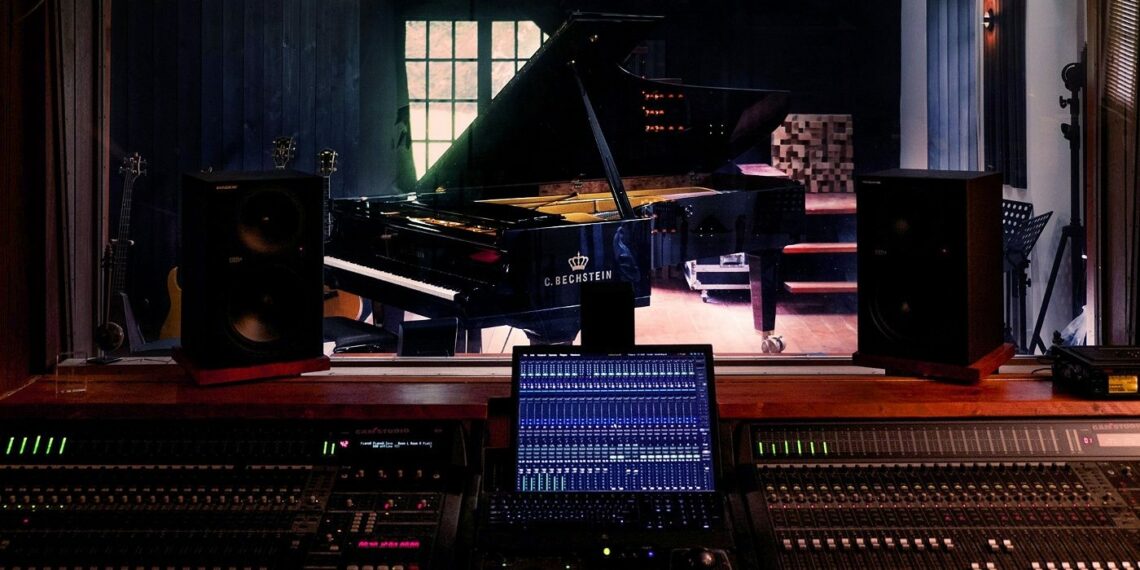
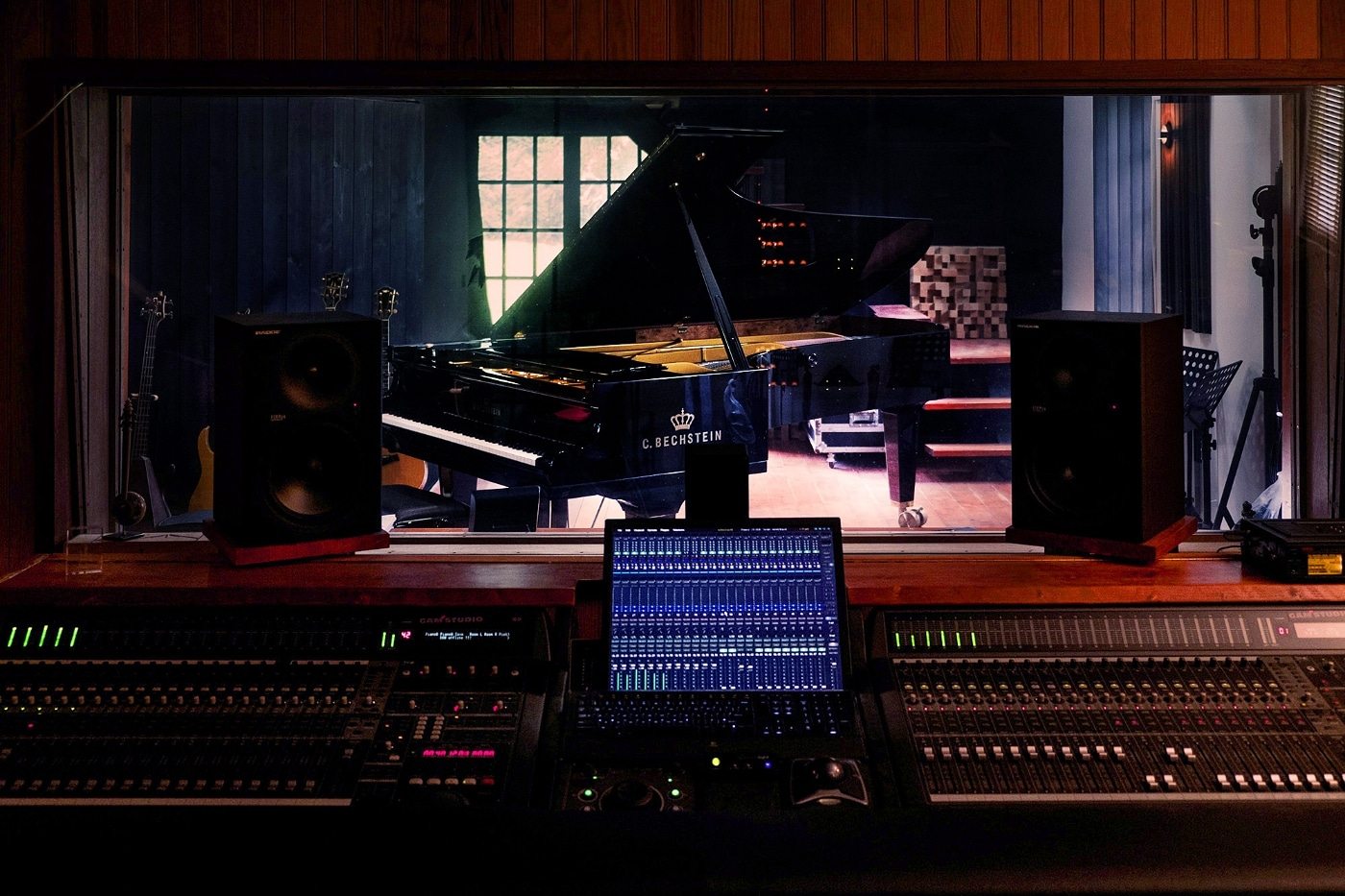
A grand piano for recording studio must meet different requirements than an instrument intended solely for the living room or stage. In the studio, the primary focus is on a balanced sound, precise mechanics, good tuning stability, and an instrument versatile enough to adapt to various musical styles.
The choice also depends on the size of the room, its acoustic treatment and the type of sound recordings planned.
Here are the main criteria to know and the most interesting models for equipping a studio.
Why choose a grand piano in a studio?
A grand piano has several advantages for recording.
Compared to an upright piano, it generally offers:
- a greater harmonic richness; ;
- improved sound projection; ;
- more dynamism; ;
- deeper bass; ;
- a more responsive mechanism; ;
- more possibilities for microphone placement.
The lid can also be opened to different levels, which allows for significant changes in the sound projection.
For a professional studio, this flexibility is particularly attractive.
The essential criteria for a recording studio
1. The size of the piano
A larger piano generally offers longer strings and a larger soundboard.
But in the studio, the biggest piano isn't always the best choice.
An instrument measuring 180 to 220 cm often represents an excellent compromise between:
- depth of bass; ;
- power ;
- precision ;
- ease of sound recording.
A 270cm concert grand piano can be exceptional, but it requires a much larger room and perfect acoustic treatment.
2. Sound balance
For recording, a balanced sound is essential.
The piano must not have:
- bass frequencies that are too dominant; ;
- excessively aggressive high notes; ;
- significant differences between the registers.
This relative neutrality makes the sound engineer's job easier during mixing.
3. Mechanics
A pianist in the studio must be able to precisely control:
- the pianissimo; ;
- rapid attacks; ;
- the rehearsals; ;
- strong nuances.
A well-tuned mechanism is therefore essential.
This is notably one of the strengths of professional instruments from Yamaha, Kawai, Steinway or Fazioli.
4. The stability of the agreement
A recording session can last several hours or several days.
An instrument that goes out of tune quickly can become a real problem.
Stability depends in particular on:
- the quality of the piano; ;
- of his interview; ;
- of the temperature; ;
- from the humidity in the studio.
👉 Also read: How do you tune a grand piano?
The best grand pianos for studio
| Model | Length | Profile | Our opinion |
|---|---|---|---|
| Yamaha C3X | 186 cm | Versatile studio | Excellent compromise |
| Kawai GX-3 | 188 cm | Classical and jazz | Very pleasant to the touch |
| Steinway Model B | 211 cm | High-end studio | Rich sound |
| Bösendorfer 200 | approx. 200 cm | Classical and acoustic | His warm |
| Fazioli F212 | 212 cm | Premium Studio | Very high precision |
1. Yamaha C3X: the versatile choice
THE Yamaha C3X probably constitutes one of the most interesting choices for a professional or semi-professional studio.
At 186 cm, it offers sufficient height to achieve:
- convincing serious cases; ;
- excellent momentum; ;
- a very good projection; ;
- an extremely precise mechanism.
Its clear and well-defined sound also makes mixing easier.
It is particularly suitable for:
- in the classic style; ;
- to jazz; ;
- to pop; ;
- to film music; ;
- to the trading sessions.
2. Kawai GX-3: an excellent alternative
THE Kawai GX-3 is very close to the Yamaha C3X in terms of dimensions.
It is appreciated for its feel and its slightly rounder sound.
It can be an excellent choice for:
- the classic; ;
- jazz; ;
- acoustic music.
3. Steinway Model B: the high-end benchmark
THE Steinway Model B is one of the most sought-after pianos for professional studios.
At 211 cm, it offers more depth than a medium-sized piano while remaining much easier to install than a large Model D concert grand.
Its main strength lies in its harmonic richness.
It is particularly suited to recordings where the piano needs to occupy a central place in the mix.
4. Bösendorfer 200: for a warm sound
Bösendorfer speakers are renowned for their very distinctive sound.
THE Bösendorfer 200 may be particularly interesting for:
- the classic; ;
- romantic music; ;
- the soundtracks; ;
- acoustic recordings.
Its darker, warmer timbre can bring a strong identity to a production.
5. Fazioli F212: for premium studios
THE Fazioli F212 It clearly aims for the high-end market.
At just over two meters in length, it combines:
- power ;
- precision ;
- clarity; ;
- broad dynamic.
It is an excellent choice for studios that regularly record professional pianists.
Yamaha C3X or Steinway Model B for a studio?
These two models correspond to two different philosophies.
| Criteria | Yamaha C3X | Steinway Model B |
| Length | 186 cm | 211 cm |
| Sound | Clear and concise | Rich and complex |
| Versatility | Excellent | Excellent |
| Pop/jazz recording | Excellent | Excellent |
| Classic | Excellent | Exceptional |
| Budget | More accessible | Clearly superior |
| Studio size | Average | Medium to large |
The Yamaha is often the most rational choice for a versatile studio.
The Steinway becomes particularly interesting when the piano is one of the main instruments in the studio.
What size room should I plan for?
The size of the room plays a major role.
A powerful piano in a small room can cause:
- excessive reflections; ;
- bass frequencies that are difficult to master; ;
- an aggressive sound sensation.
A piano measuring 180 to 190 cm is generally an excellent compromise for a reasonably sized room.
Instruments over 210 cm become particularly interesting when the acoustics and volume of the room allow them to be used properly.
The importance of acoustic treatment
Buying an exceptional piano without properly treating the room can severely limit the quality of the recordings.
A studio must control:
- early reflections; ;
- reverberation; ;
- low frequencies; ;
- the resonances of the room.
Absorbent panels, diffusers and bass traps can greatly improve the result.
The treatment must nevertheless retain enough acoustic life so as not to make the piano completely dry.
Where should I put the piano?
Avoid placing the instrument as much as possible:
- directly against a wall; ;
- in a corner; ;
- in the immediate vicinity of a bay window; ;
- near a radiator or air conditioner.
A location slightly away from the walls often allows for better sound diffusion.
This also makes microphone placement easier.
Which microphones should I use?
There are many different sound recording techniques.
Common configurations include:
Pair of condenser microphones
Two microphones can be placed above the strings to obtain an accurate stereo image.
Microphones further apart
They allow you to capture more of the room's acoustics.
Combination of proximity and atmosphere
This is often the most versatile solution.
However, the choice depends heavily on:
- of the piano; ;
- of the room; ;
- musical style; ;
- of the desired result.
What budget should I plan for?
The budget varies enormously depending on the brand and range.
| Studio level | Indicative budget |
| Home studio | €8,000 to €20,000 |
| Semi-professional studio | €15,000 to €35,000 |
| Professional Studio | €30,000 to €70,000 |
| High-end studio | €70,000 and more |
Buying a used piano often allows access to a higher-end model.
You should also plan for:
- transportation; ;
- tuning; ;
- mechanical regulation; ;
- acoustic treatment; ;
- possibly a humidity control system.
Our recommendation based on your studio
| Profile | Piano recommended |
| Home studio | Yamaha GB1K / Kawai GL |
| Versatile studio | Yamaha C3X |
| Classical/Jazz Studio | Kawai GX-3 |
| Professional Studio | Steinway Model B |
| High-end studio | Fazioli F212 |
| A warm, sought-after sound | Bösendorfer 200 |
Don't neglect transport and maintenance
A studio piano must remain perfectly tuned.
It is advisable to schedule regular interventions from a professional, especially before important sessions.
The transport must also be entrusted to a specialist company.
👉 How do you transport a grand piano?
👉 How to maintain a grand piano in winter?
Our verdict
The best grand piano for recording studio is not necessarily the biggest or the most expensive.
The choice must take into account the acoustics of the room, the musical style, the level of the pianists and the available budget.
For a versatile studio, the Yamaha C3X constitutes one of the most balanced choices.
For a high-end studio seeking a more distinctive sonic identity, the Steinway Model B, THE Bösendorfer 200 or the Fazioli F212 allow us to go much further.
But whatever brand you choose, the quality of the tuning, the mechanics and the acoustics of the room will be just as important as the piano itself.